

The Painted Smile and the Quiet Grace: Dennis Halstead’s Unvarnished Truth
By Lee Kemp | EMIAC Studio
The Painted Smile and the Quiet Grace: Dennis Halstead’s Unvarnished Truth
By Lee Kemp | EMIAC Studio
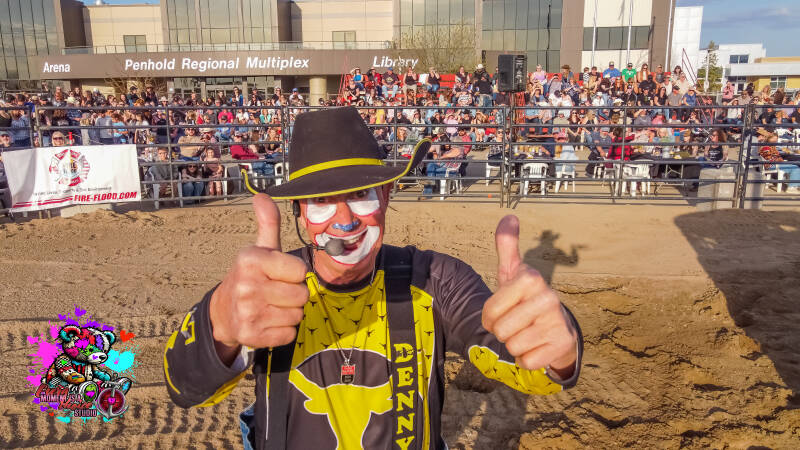
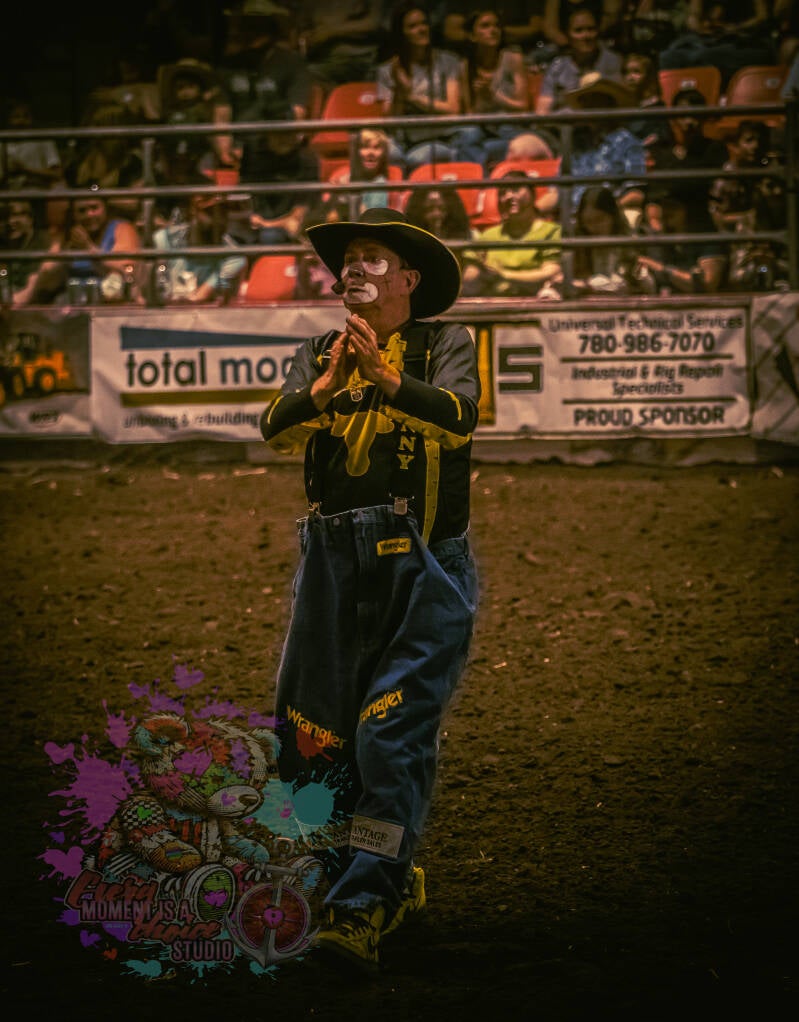
There is an absolute science to making a rodeo arena come unglued, and Dennis Halstead has the formula down cold.
To understand how the 10-time Entertainer of the Year operates, you just have to look at how he handles the music. Recently, a young music director wanted to split the setlist with him: she would pick a song, then he would pick a song. Halstead agreed, but with one veteran condition: If your first song bombs, we’re going back to my program.
Halstead walked out into the dirt and fired off Neil Diamond’s "Sweet Caroline." The crowd instantly erupted, clapping and singing every word. Then, the young director queued up her track.
You could hear a pin drop.
Halstead just looked up at the booth. "Sorry sweetheart, but we're going back to what works." He immediately launched right back into the classics, and the energy skyrocketed again.
He picks the classics because he knows a six-year-old and an eighty-year-old both know the words. His job isn't just about surviving the barrel; it is about building a massive, undeniable wall of sound. By the time a cowboy nods his head in the bucking chute, Halstead’s true goal is already accomplished: the grandstands are absolutely electric.
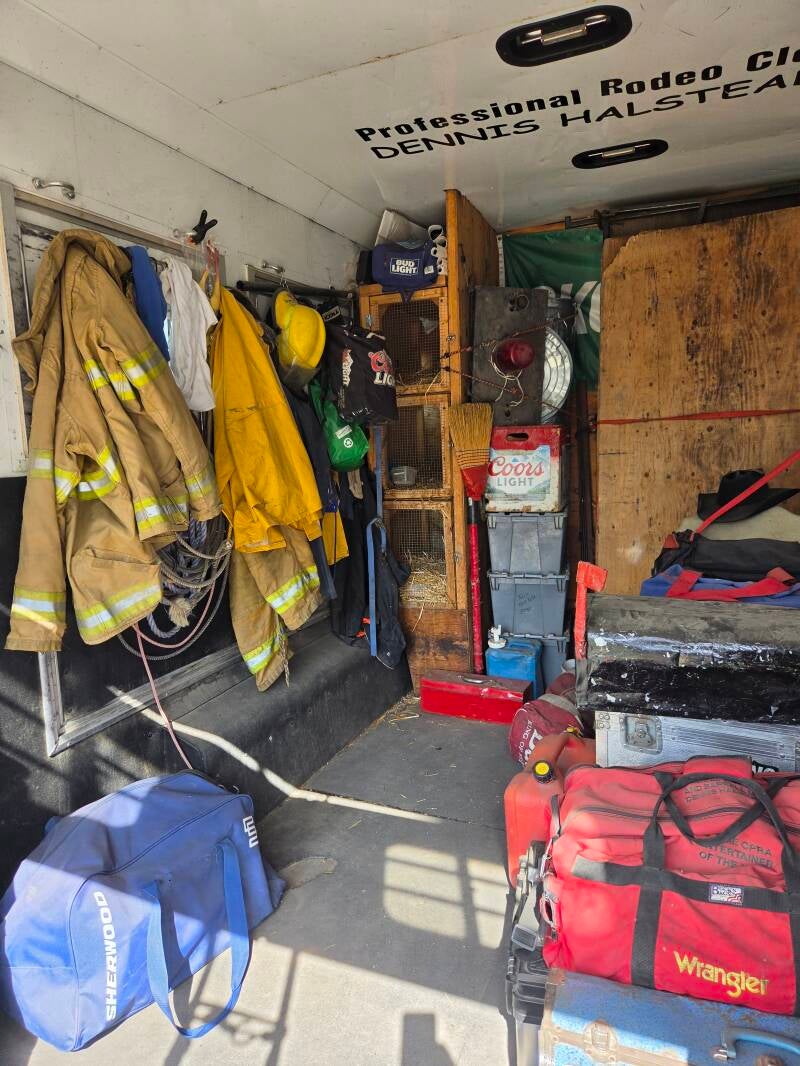
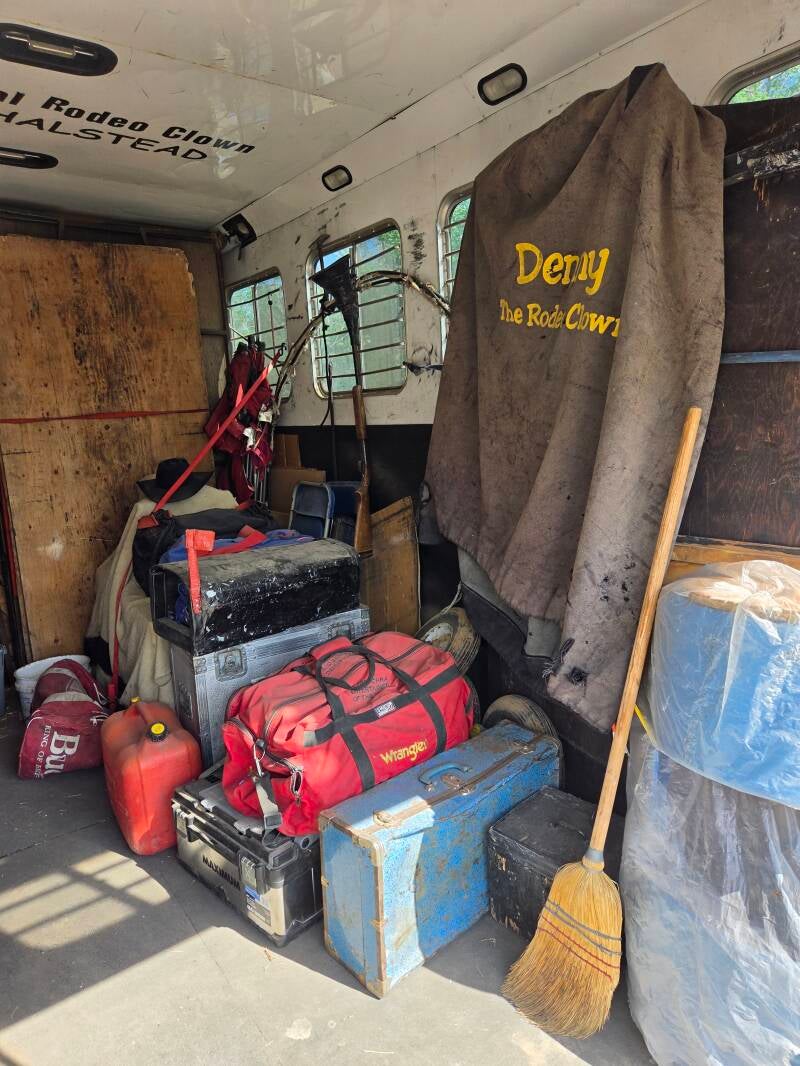
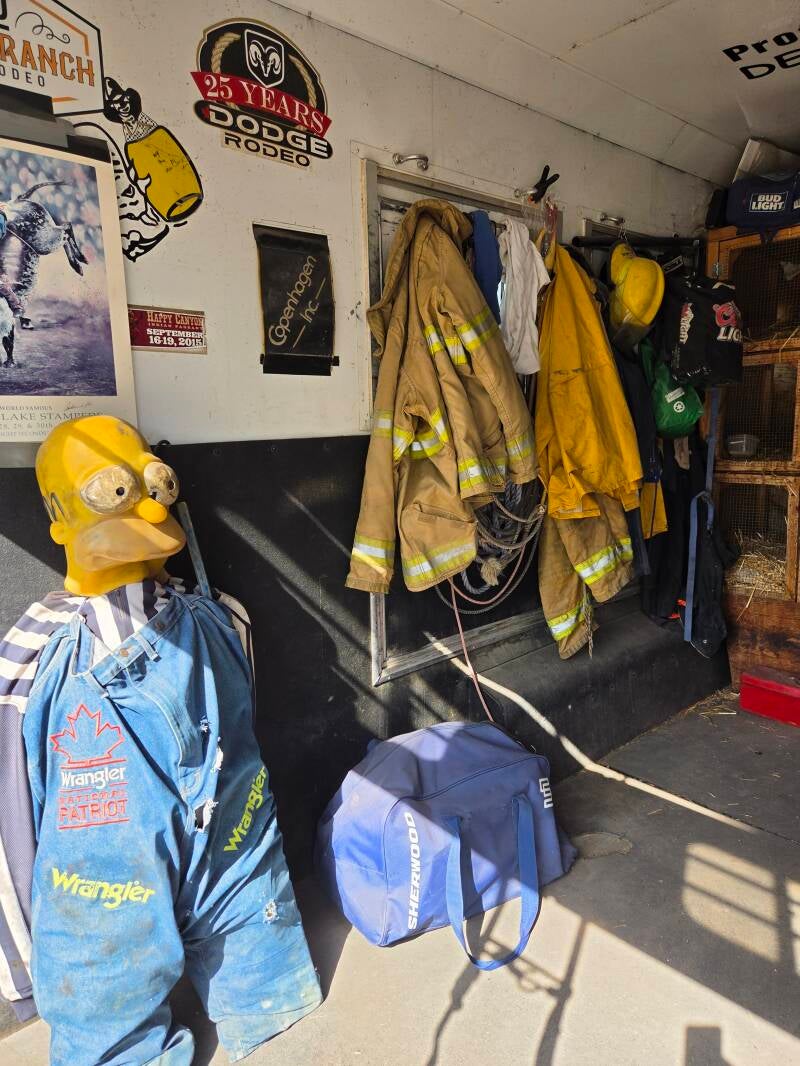
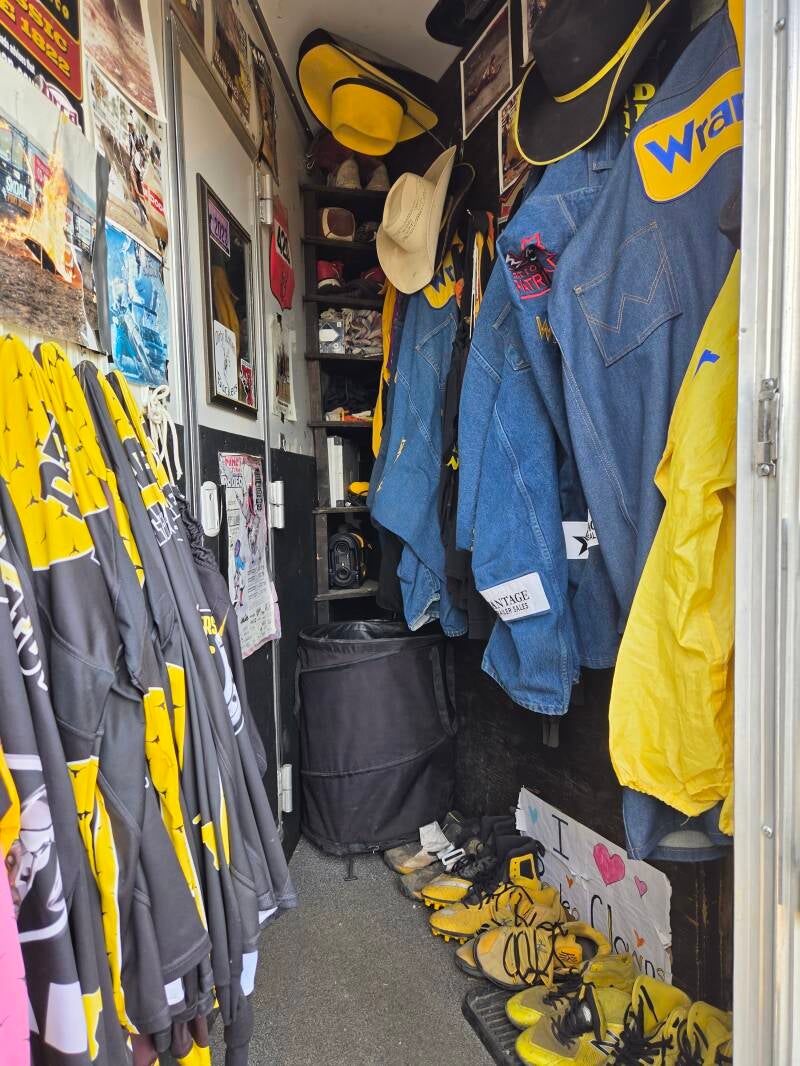
But if you walk behind the chutes at the Leduc Black Gold Pro Rodeo and sit down in his trailer, you quickly realize that the loud, unapologetic entertainer in the dirt is only a fraction of the man.
Long before he put on the makeup, Halstead was a Junior Hockey player—a background that literally landed him a 30-year career as a Calgary firefighter. The department saw his hockey resume, hired him, sent him to play in the Canadian National Firefighters tournament, and then actually trained him to put out fires.
He has always been a man’s man, deeply accustomed to performing on a stage. But more importantly, his time as a first responder ingrained a profound sense of brotherhood in him. Sitting across from him, he explains that the culture of the firehouse and the rodeo arena are almost identical.
"You rely on each other for safety, just like I do with the bullfighters here in this arena," Halstead says. "Those guys have my back. And same with the fire department, I relied on the guys that I worked with to have my back."
That reliance extends far beyond physical safety. The entertainment side of the rodeo business carries a heavy mental weight. Halstead acknowledges the extreme emotional whiplash of his job—shifting from being the high-energy center of attention for thousands of screaming fans, to driving 16 hours completely alone in the cab of his truck.
On the days when the burnout creeps in and the motivation to put on the paint fades, he looks at a small memorial patch taped to his makeup mirror. It honors the young daughter of a colleague who passed away years ago. That patch is his quiet reminder to keep going.
That profound capacity for empathy—the heart beneath the paint—was never more visible than on a Friday afternoon in Tisdale, Saskatchewan. It was the hardest rodeo he has ever worked in his entire life.
At 4:00 PM, during their production meeting, the rodeo crew learned that a bus carrying the Humboldt Broncos hockey team had been in a horrific crash just 10 miles outside of town. The local first responders rushing to that devastating scene were the very same volunteer fire department and committee members hosting the rodeo.
Because of his three decades as a firefighter, Halstead understood exactly what those responders and parents were walking into. He knew that the people on that highway were enduring a trauma that would permanently alter their lives.
When it was time for the performance to start, Halstead stepped into the arena and dropped his entire act.
"I went out and I said, 'I just want to say sorry to you as a community. And I gotta be honest with you people, I can't come out here tonight and be a funny guy,'" Halstead recalls. "I said, 'I just want all of us to enjoy the night and just appreciate that we're very lucky to have what we have in our lives.' And I didn't do a single joke through the night."
In a moment of unimaginable community heartache, the 10-time Entertainer of the Year didn't try to force a smile. He simply stood with them in the dirt.
That fundamental respect for people is the core of who he is. Halstead credits his mentor, the legendary Leon Harris, for teaching him the golden rule of a rodeo career: You only spend 20% of your time in that arena. 80% of your time is spent out here, and this is where your career is dictated.
It is why Halstead makes it a point to shake hands with committee members, never turns down a kid asking for an autograph, and stays behind after the makeup comes off to help the crew feed the stock.
When the time eventually comes for him to pack up the barrel for good, his goals have nothing to do with the buckles, the accolades, or the laughs.
"I don't want to be known as a guy that was the best clown in that arena," he says. "I want to be known as a good guy. A guy that would help anybody."
For over 30 years, he has proven exactly that. The makeup, the barrel, and the jokes may be the act, but the profound grace, the grit, and the unyielding heart of the Western community are who Dennis Halstead truly is.
#DennisHalstead #rodeoclown #rodeoclown #funnyman #bullfighter #firefight #hockeystar #husband #friend #CPRA #PCRA #LRA #WRA #FCA #BRC #wranglernationalfinals #canadiannationalfinals
I believe the raw, perfectly imperfect stories of the western world deserve to be told, which is why these Grit & Grace features will always be free. If you want to support independent western media and fund the Monster Energy it takes to edit these features, you can pitch in below.
Add comment
Comments